RVDesk
Shop software for RV repair
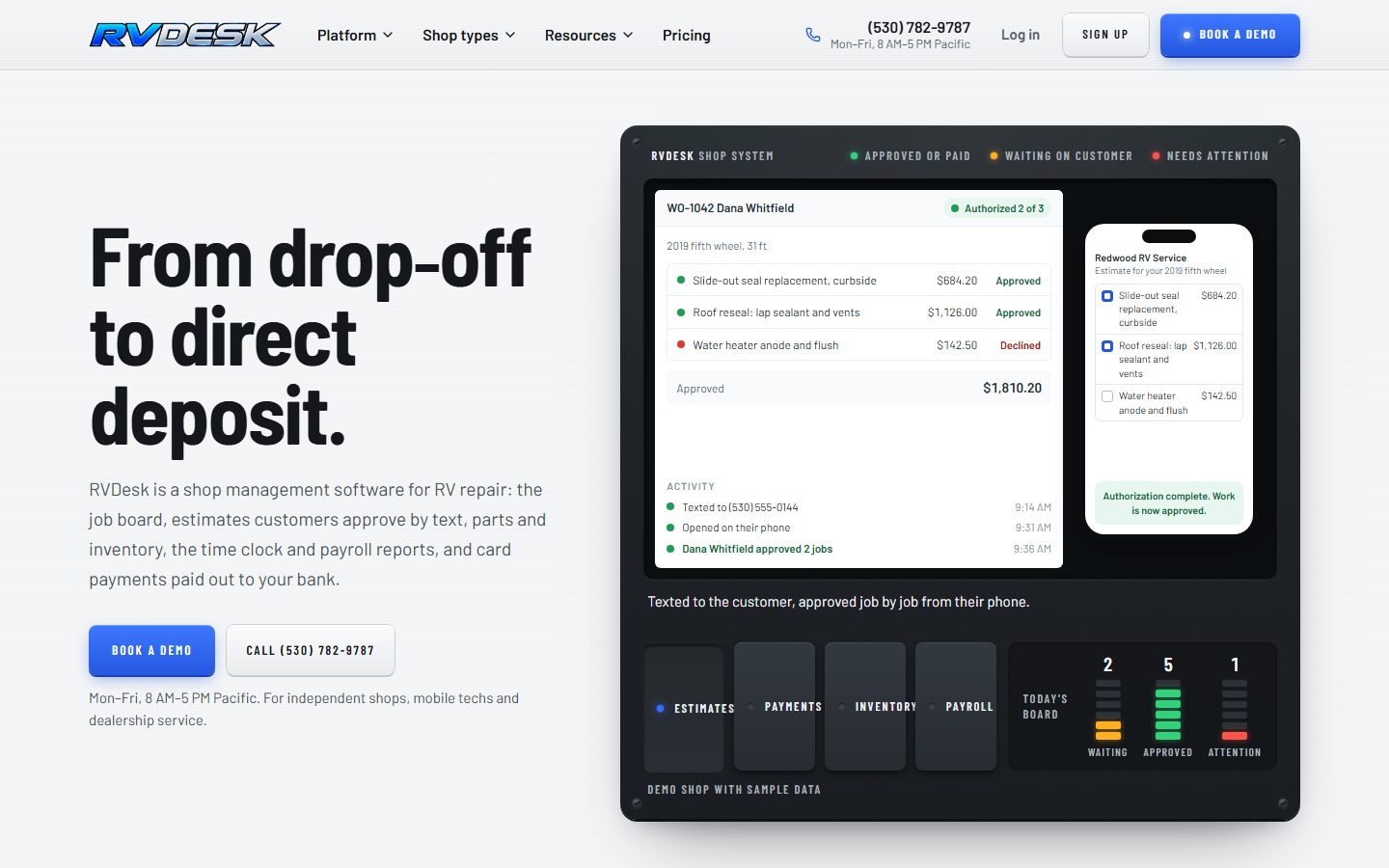
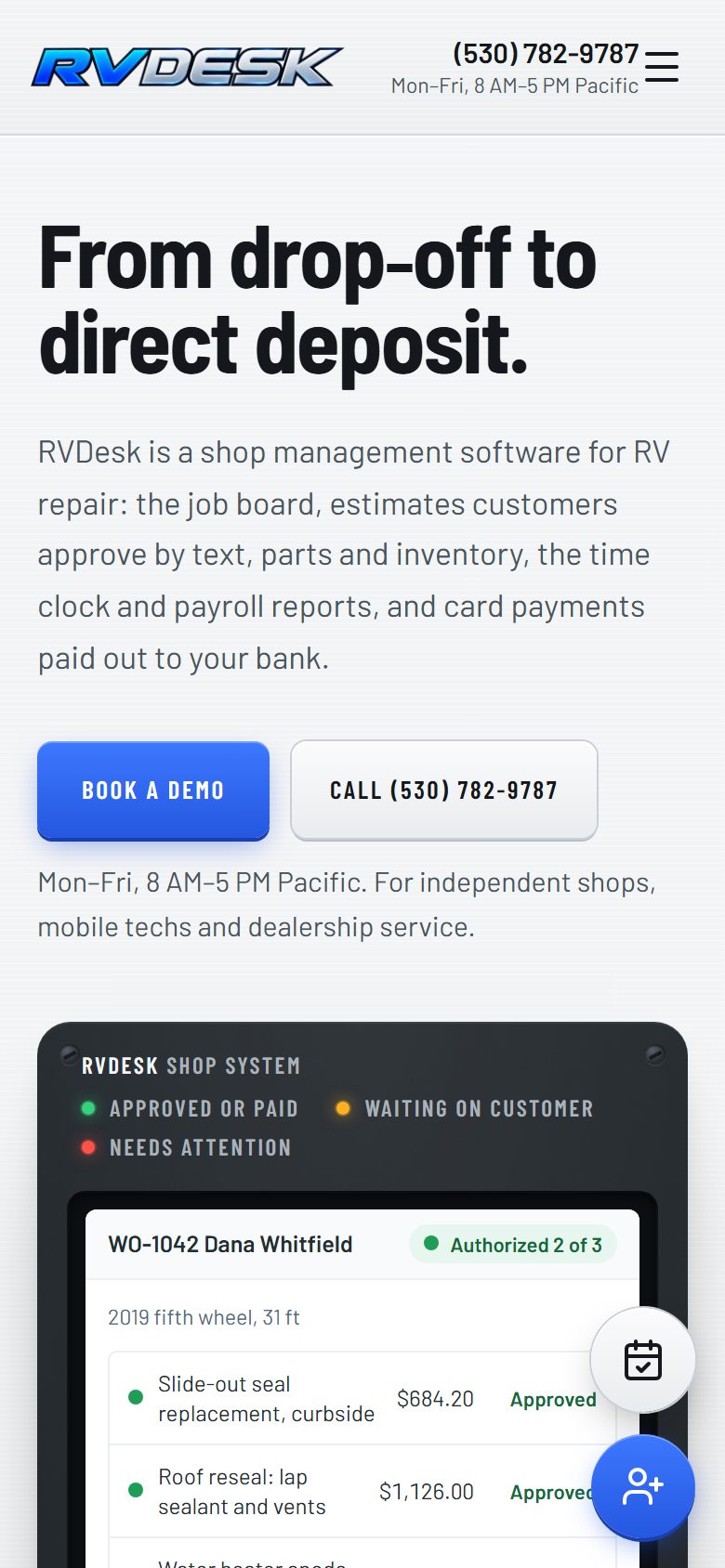
A full business system, built from scratch.
Work orders, estimates customers approve by text, parts and inventory, the time clock and card payments. Designed and coded by Josh.
Off-the-shelf software makes your business work its way. I build the system your business actually runs on: the admin, the booking, the payments, the inventory and the connections between them. Back end and front end, by one person.
Custom business systems
Plenty of growing businesses end up running on a stack of tools that don't talk to each other. A spreadsheet for stock, a calendar for bookings, a separate app for payments, and someone copying between them at the end of the day. It works until it doesn't.
I build one system around the way you already work. Your staff log in to an admin made for their jobs. Customers book, approve and pay from their phones. The data lives in one place, and the parts that should talk to each other do.
I built RVDesk, shop software for RV repair, from scratch: work orders, estimates customers approve by text, parts and inventory, the time clock and card payments. I built Pathway Aminos, a members-only store for a high-risk industry, with verified sign-up, lot documentation and order tracking. And at Lavender Hills Assisted Living, the staff update room availability, events and tours themselves.
Three very different businesses. The same idea every time: software that fits the work, instead of work bent to fit the software.
Business systems
The screens your staff log in to, with the permissions, records and reports their jobs need.
Customers pick a time online, and your calendar and your team see it right away.
Estimates, invoices and card payments in the same system as the work, so nothing gets typed twice.
Stock, parts and orders tracked in one place and tied to the jobs that use them.
Sign-up, verification and order history, including members-only access when you need to control who buys.
Approvals, reminders and status updates sent on their own, so customers aren't calling to ask.
Connections to the services you already use, so data moves by itself instead of by hand.
A public site built to rank, so the system starts with customers finding you. SEO services
Shop software for RV repair
A full business system, built from scratch.
Work orders, estimates customers approve by text, parts and inventory, the time clock and card payments. Designed and coded by Josh.
Members-only research store


A store built for a high-risk industry.
Verified researcher sign-up, lot documentation and order tracking in one members-only catalog, built end to end.
Assisted living, Redding CA
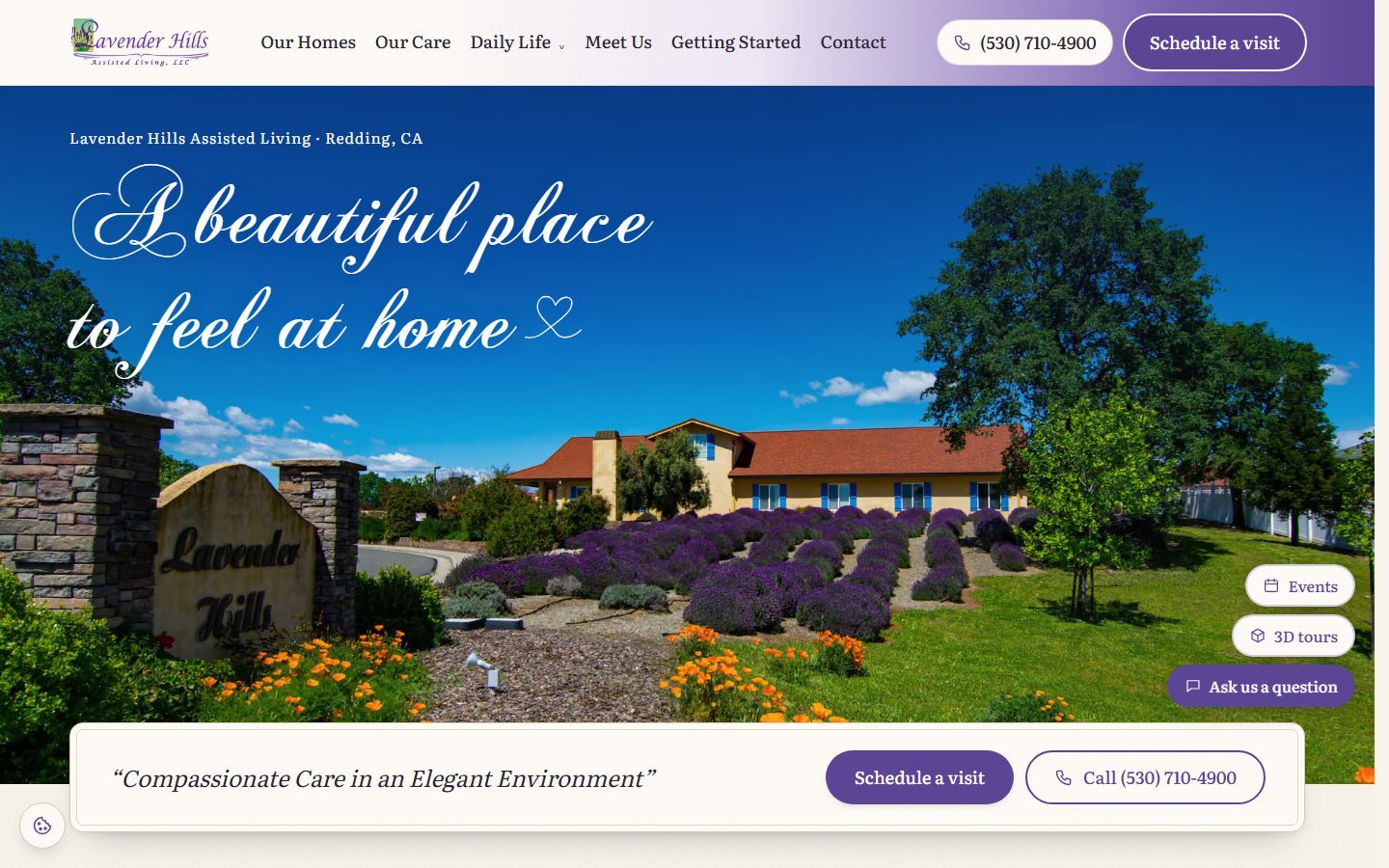
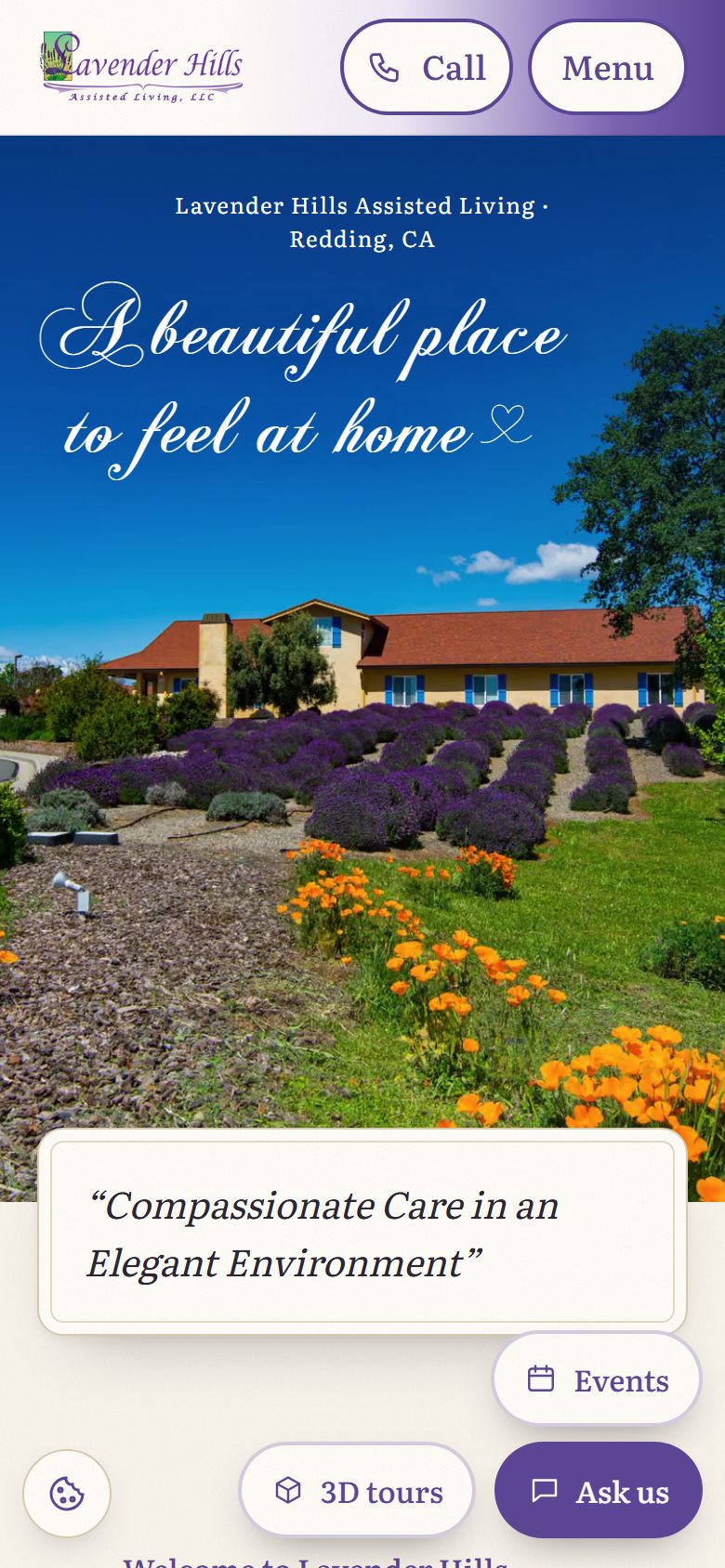
Two licensed homes, one new site.
Room availability, events and tours the staff update themselves, with search work underway for families looking for care in Redding.
I learn the job, the paperwork and where the hours go, from the people who'll actually use the system.
The workflow that costs you the most time gets built first, so the system starts earning its keep early.
Your staff use it on real work. Whatever's awkward gets fixed while it's still easy to change.
New pieces go in as the business needs them, on the same foundation, by the same person.
Keep reading
Walk me through how the business runs today. I'll tell you what's worth building and what isn't.